Pharmacology & PK Programs
Sponsors collecting serial blood for PK profiling, bioavailability studies, or tissue distribution analysis rely on our timed-draw precision and volume tracking to ensure complete, valid samples.
Research animal retirement and lifetime care, now available through Alpha Genesis. Professionally managed lifetime care for retired research primates, with expert social reintroduction into stable outdoor groups led by veterinary staff deeply experienced in laboratory-animal medicine.
Learn moreCapabilities
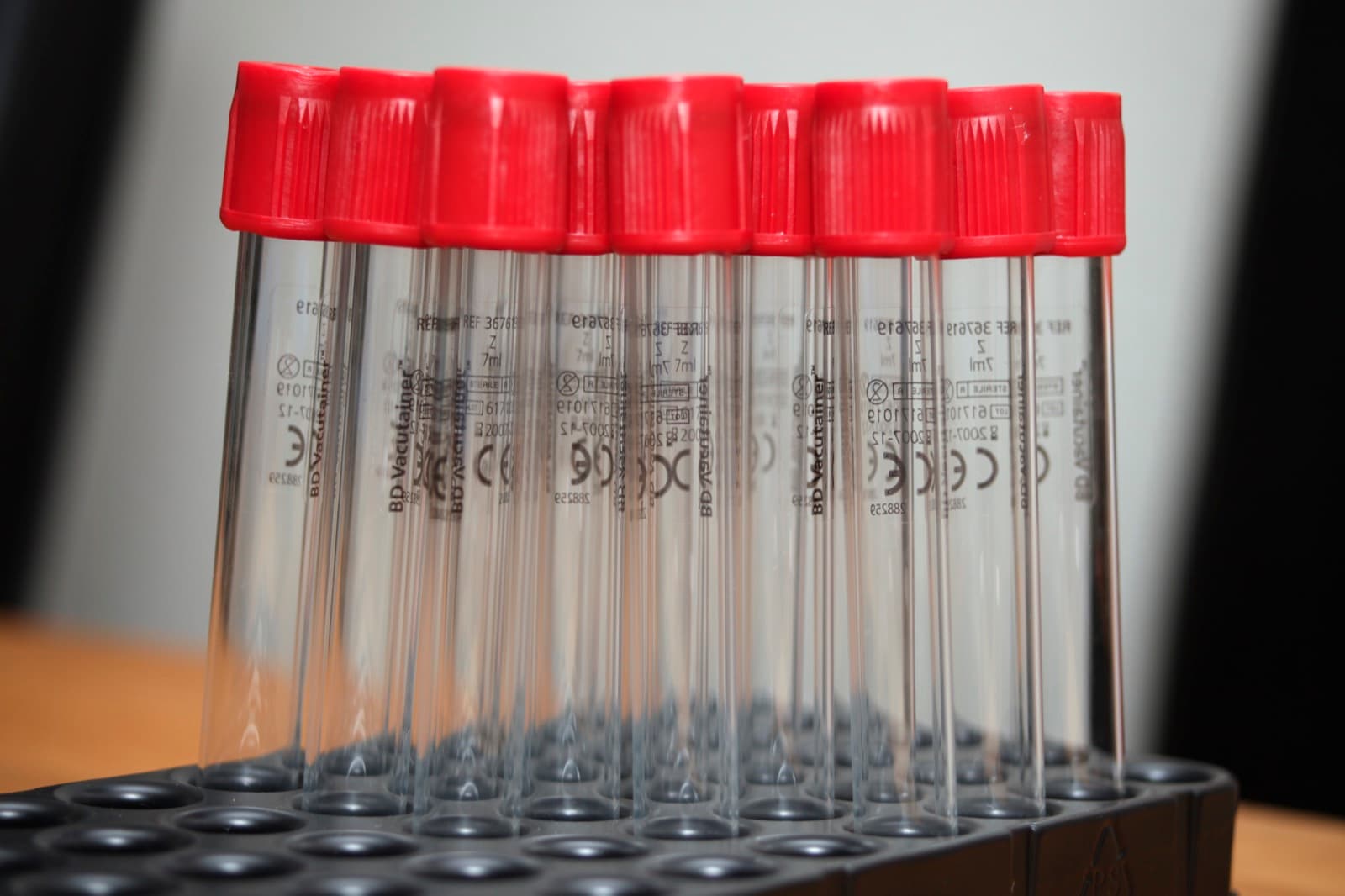
Serial and terminal biospecimen collection in NHP and rodent models, blood, serum, plasma, PBMCs, CSF, urine, and tissue, with custom protocol design, in-house processing, cryopreservation, and coordinated shipment to sponsor or partner laboratories.
Biospecimen quality is a function of the entire collection and processing workflow, from the moment the animal is sampled to the moment the sample arrives at the analytical laboratory. Poorly collected, mishandled, or inadequately documented samples produce analytical results that are difficult to interpret or impossible to defend. Alpha Genesis builds biospecimen quality into every protocol, from initial collection design through final shipment.
Our collection capabilities span the full range of in-life and terminal biospecimens used in preclinical research: serial blood sampling for PK and immunology studies, PBMC isolation and cryopreservation, CSF collection, urine and fecal sampling, and tissue collection at necropsy. Custom collection protocols are developed in collaboration with sponsors and aligned with the requirements of downstream analytical platforms.
The connection between animal welfare and biospecimen quality is direct. Samples collected from stressed, ill, or inadequately managed animals show elevated cortisol, altered cytokine profiles, artifactual hematology values, and degraded PBMC viability. Our welfare-centered operations are the scientific prerequisite for biospecimen data that analytical laboratories can trust.
Sponsors collecting serial blood for PK profiling, bioavailability studies, or tissue distribution analysis rely on our timed-draw precision and volume tracking to ensure complete, valid samples.
Vaccine and immunotherapy developers use our PBMC isolation, serum banking, and longitudinal collection programs to build immune response datasets across study timepoints.
Translational researchers building NHP reference datasets or biomarker panels use our structured collection programs to generate high-quality, well-documented archival sample sets.
Sponsors sourcing NHP biospecimens for assay development or reagent qualification can access both in-life collection programs and archival lots through our bioproducts infrastructure.
Learn moreBiospecimen collection protocols are species-specific and designed with welfare-appropriate volume limits and sampling intervals.
Rhesus and cynomolgus macaques are the primary NHP species for biospecimen programs, with established volume limits, collection techniques, and processing SOPs for all major specimen types.
Rat biospecimen collection supports PK profiling, toxicology studies, and immunology programs with well-characterized blood volume limits and standard processing procedures.
Mouse biospecimen collection is supported for serial and terminal blood, tissue, and organ collection, with attention to IACUC-compliant volume limits in small-volume species.
African green monkeys are available for biospecimen programs where this species offers scientific or practical advantages, with established collection techniques and processing SOPs.
Capuchin monkeys are supported for specialized biospecimen collection where a New World primate model is scientifically appropriate.
Additional species, including spider monkeys, pigtail macaques, baboons, and marmosets, are available on request for custom biospecimen programs. Contact us to discuss species and specimen requirements.
Biospecimen quality begins with veterinary-governed collection: species-specific blood volume and frequency limits, stress-minimizing technique, and clinical monitoring throughout longitudinal collection programs. Board-certified veterinary leadership and preventive medicine protect both the animal and the analytical value of each sample, with enrichment and continuous health surveillance sustaining welfare across rodent and NHP donors. Trained phlebotomy and processing staff follow SOP-driven collection and processing procedures, with chain-of-custody documentation and coordinated cold-chain shipping ensuring traceability to standards suitable for both domestic and international development programs. AAALAC accreditation and USDA licensure, with OLAW assurance (PHS Policy) and IACUC oversight, support the compliance framework.
Sample quality begins with animal health. Welfare-centered collection practices, stress-minimizing techniques, and welfare-monitored longitudinal programs protect both the animal and the analytical value of the sample.
Decades of NHP blood, CSF, PBMC, and tissue collection experience provide a technical platform for high-value biospecimen programs that demand species-specific precision.
Veterinary staff review collection schedules, monitor cumulative volumes, and approve sampling procedures to maintain animal welfare and collection quality simultaneously.
Biospecimen programs that span rodent and NHP species can be coordinated within one organization, with consistent labeling, processing SOPs, and chain-of-custody standards.
In-life biospecimen collection and our bioproducts archival portfolio are complementary resources that sponsors can access together for study samples and reference reagents.
End-to-end cold-chain management, sponsor-specific labeling, and proactive shipment communication ensure samples arrive at the analytical laboratory in the condition they were intended.
Cumulative blood volume is tracked electronically against IACUC-approved limits for each animal by species and body weight. Study managers and veterinary staff review running totals and flag any approach to limits before the next scheduled draw.
Tell us your species, sample types, assay requirements, and receiving laboratory specifications and we will design a collection and processing protocol that protects sample quality from collection through delivery.