
AAV & Viral Vector Developers
Programs advancing AAV, lentiviral, and other vector-based therapies use rodent models for proof-of-concept and NHP models for translational biodistribution, immunogenicity, and IND-enabling safety.
Research animal retirement and lifetime care, now available through Alpha Genesis. Professionally managed lifetime care for retired research primates, with expert social reintroduction into stable outdoor groups led by veterinary staff deeply experienced in laboratory-animal medicine.
Learn moreCapabilities
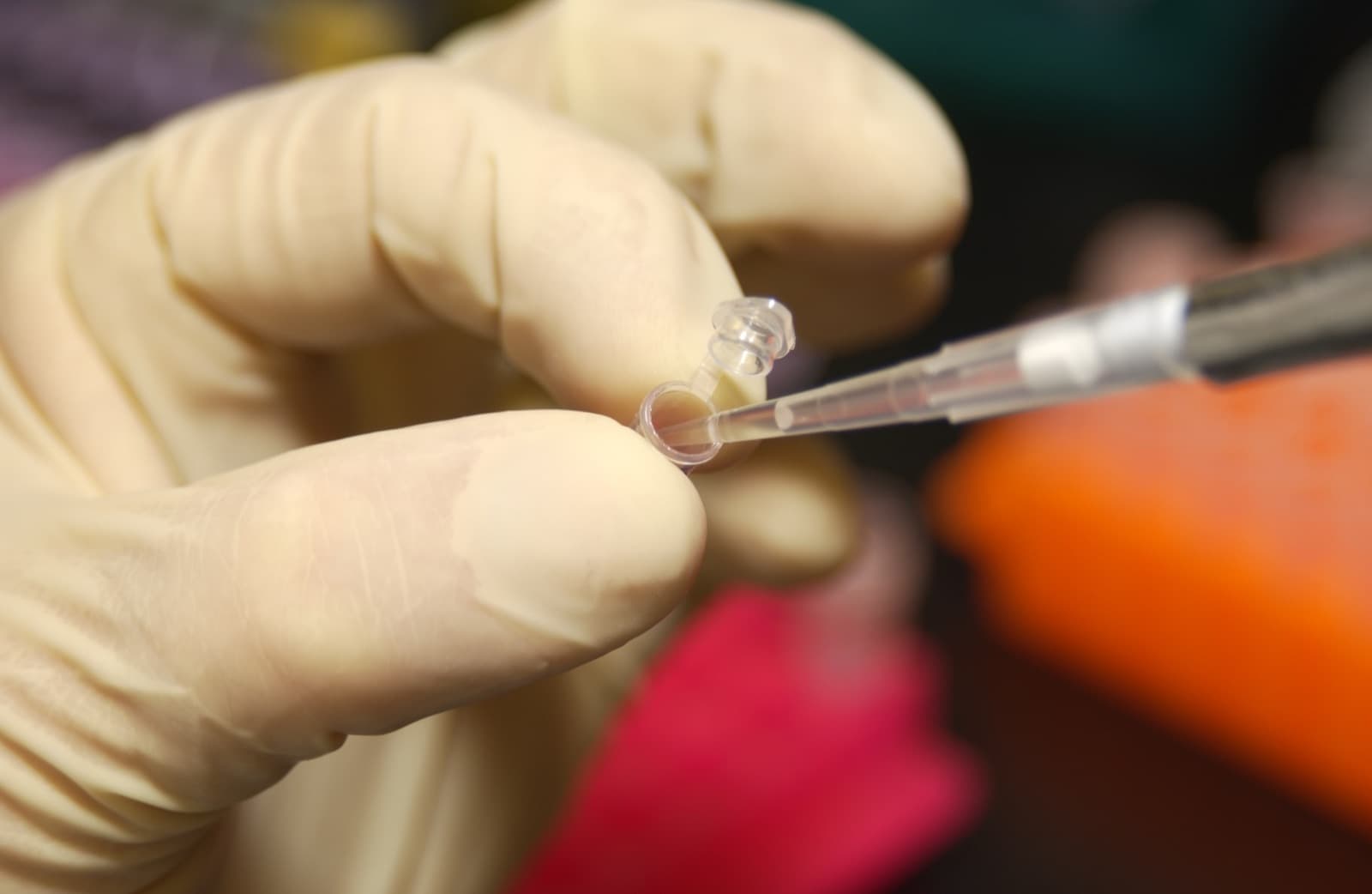
In-life support for AAV and other gene-therapy programs across rodent and NHP models, from early proof-of-concept in disease models through translational biodistribution, immunogenicity, and GLP-aligned safety studies, with the dosing routes, sampling, and veterinary oversight these vectors demand.
Gene-therapy programs place unusual demands on preclinical models. Efficacy and mechanism are often established first in rodents, including disease-specific and transgenic models, where cost and throughput allow dose-ranging and route optimization. But translation to the clinic usually hinges on the nonhuman primate: NHPs are the model where pre-existing anti-capsid immunity, transduction of clinically relevant tissues, and delivery routes such as intrathecal, intracisternal, and subretinal administration can be evaluated in a system close to human biology.
Alpha Genesis supports both ends of that path. Our rodent programs cover proof-of-concept efficacy, dose-ranging, biodistribution, and GLP-aligned safety work in mice and rats. Our NHP programs add the translational studies that gene-therapy INDs typically require: neutralizing-antibody screening to define eligibility, systemic and CNS or ocular dosing, longitudinal vector-shedding and biodistribution sample collection, and immunogenicity monitoring against both the capsid and the transgene product.
Because vector-based studies often run long and involve specialized dosing procedures, animal welfare is inseparable from data quality. Animals that are socially housed, appropriately enriched, and managed by an experienced veterinary team hold more stable physiological and immunological baselines, which matters when the readouts are antibody titers, clinical pathology, and histopathology. Welfare is the foundation that makes gene-therapy safety and immunogenicity data interpretable.
Programs advancing AAV, lentiviral, and other vector-based therapies use rodent models for proof-of-concept and NHP models for translational biodistribution, immunogenicity, and IND-enabling safety.
Therapies delivered by intrathecal, intracisternal, intracerebroventricular, or subretinal routes rely on our NHP surgical and delivery experience, with rodent models supporting earlier route and dose optimization.
Sponsors developing one-time therapies for genetic disease use rodent disease and transgenic models for efficacy and NHP studies for translational safety and durability of expression.
Investigators building vector, promoter, or delivery-route datasets use our coordinated dosing and biospecimen infrastructure to generate longitudinal rodent and NHP samples.
Rodents carry the early efficacy, dose-ranging, and biodistribution work; NHP models add the neutralizing-antibody, delivery-route, and translational safety data that gene-therapy submissions typically require.
Mouse models, including disease-specific and transgenic lines, support proof-of-concept efficacy, transduction and expression screening, dose-ranging, and early biodistribution for vector programs.
Rat models support biodistribution, expression durability, and GLP-aligned safety endpoints where a rodent system is appropriate, with historical control data to aid interpretation.
Macaques are the pivotal translational species for gene therapy: pre-existing anti-AAV neutralizing-antibody screening, transduction of clinically relevant tissues, CNS and ocular delivery, and immunogenicity and safety endpoints, including DRG assessment.
African green monkeys are available for vector programs where this species offers scientific or translational advantages over the macaque.
Capuchin monkeys are supported for specialized gene-therapy programs where a New World primate model is scientifically appropriate.
Additional species, including spider monkeys, pigtail macaques, baboons, and marmosets, are available on request for custom gene-therapy programs. Contact us to discuss species and protocol fit.
Gene-therapy studies combine specialized vector-delivery procedures, longitudinal biodistribution and shedding sampling, and immunogenicity monitoring, all under board-certified veterinary leadership across rodent and NHP models. Vector work is conducted under institutional biosafety review at the appropriate containment level, and neutralizing-antibody, biodistribution, and immunogenicity bioanalysis is coordinated with qualified partner laboratories while in-life conduct, sample collection, and clinical pathology are performed in-house. SOP-driven operations and audit-ready documentation maintain inspection readiness. AAALAC accreditation and USDA licensure, with OLAW assurance (PHS Policy) and IACUC oversight, support the compliance stack. GLP and non-GLP study support is available, with documentation suitable for IND-enabling and international development programs.
Move from rodent proof-of-concept into pivotal NHP biodistribution and safety studies with one partner, preserving scientific context and study-team relationships across stages.
Direct access to established NHP colonies supports pre-dose anti-capsid NAb screening to define eligibility, a routine gate for AAV programs that many CROs cannot source in-house.
Veterinary and surgical teams experienced with intrathecal, intracisternal, and ocular delivery in NHP support the routes that gene-therapy programs increasingly depend on.
Structured multi-tissue collection, including dorsal root ganglia for AAV neurotoxicity assessment, with nucleic-acid preparation and coordinated qPCR/ddPCR bioanalysis.
Long vector studies depend on stable baselines. Social housing, enrichment, and experienced veterinary care keep clinical pathology, antibody, and histopathology readouts interpretable.
Immunogenicity, shedding, and biodistribution samples can be processed, cryopreserved, and shipped through our biospecimen infrastructure, with archival NHP samples available for assay development.
Yes. Pre-dose blood sampling for anti-capsid neutralizing-antibody screening is routinely built into AAV programs to define animal eligibility, with the NAb assay coordinated through a qualified partner laboratory. Serotype and assay format are confirmed during protocol review.
Whether you need rodent proof-of-concept, NHP neutralizing-antibody screening, CNS or ocular delivery, or biodistribution and immunogenicity sampling, our team will help you design a welfare-centered gene-therapy study that generates translatable, submission-ready data.