
Vaccine Developers
Biotech and pharma sponsors advancing prophylactic or therapeutic vaccines use our NHP and rodent models to characterize immunogenicity, dose-response, and durability of immune responses.
Research animal retirement and lifetime care, now available through Alpha Genesis. Professionally managed lifetime care for retired research primates, with expert social reintroduction into stable outdoor groups led by veterinary staff deeply experienced in laboratory-animal medicine.
Learn moreCapabilities
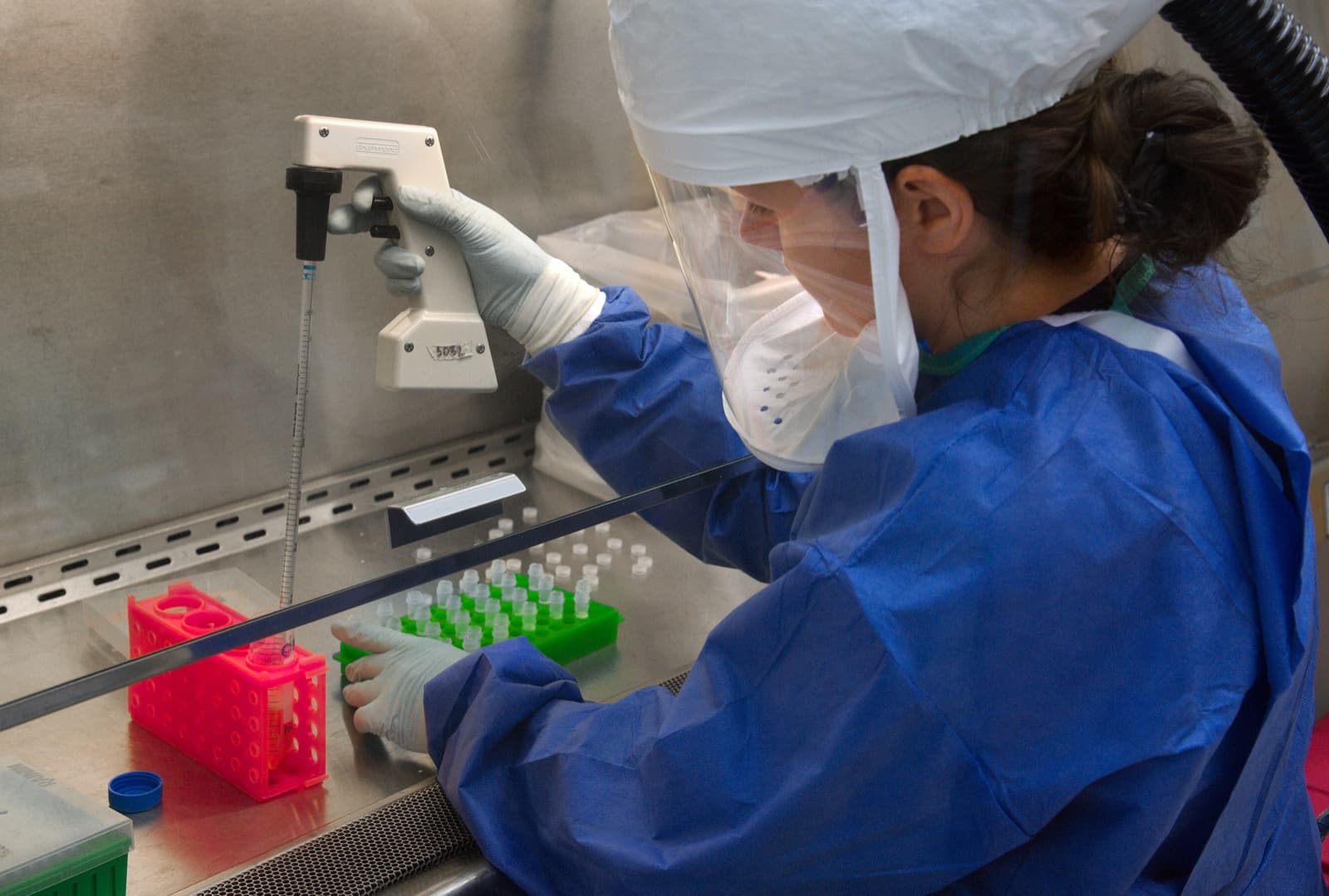
Vaccine immunogenicity, efficacy, and immune-response characterization in NHP and rodent models, supporting infectious disease and biodefense research under appropriate biosafety controls and with full veterinary and regulatory documentation.
NHPs are essential models for evaluating vaccine candidates and therapeutic interventions against infectious pathogens where human immune biology must be closely approximated. Alpha Genesis brings deep NHP husbandry and in-life study expertise to infectious disease and vaccine programs, providing a scientific and welfare-centered platform for immunogenicity and efficacy evaluation.
Vaccine development requires coordinated immune monitoring from the earliest prime-boost experiments through efficacy confirmation. We support antibody titer characterization, PBMC collection for cell-mediated immune assays, cytokine profiling coordination, and structured clinical observation, all within a framework of rigorous biosafety practices and IACUC-reviewed protocols. For programs advancing toward the clinic, immunogenicity, efficacy, and safety endpoints can be designed to support IND-enabling and international submissions, with GLP-aligned documentation suited to global development programs where applicable.
Infectious disease and biodefense programs are conducted under appropriate biosafety controls. Study design, biosafety classification, and animal-welfare provisions are established collaboratively with sponsors, institutional biosafety committees, and regulatory stakeholders before any work begins. Animal welfare is the foundation of reliable immunological data and long-term research program integrity.
Biotech and pharma sponsors advancing prophylactic or therapeutic vaccines use our NHP and rodent models to characterize immunogenicity, dose-response, and durability of immune responses.
Federal agency programs and biodefense research rely on our NHP expertise, operational rigor, and collaborative approach to biosafety-compliant study execution.
Investigators studying host-pathogen interactions and immune correlates of protection use our coordinated biospecimen programs to generate high-quality longitudinal samples.
Teams developing monoclonal antibodies or immunotherapeutics for infectious indications use our immune monitoring infrastructure to evaluate neutralizing activity and in vivo response.
Model selection is driven by the pathogen, the immune questions, and the regulatory context. All infectious disease work requires institutional biosafety review and approval.
Rhesus macaques share significant immunological homology with humans and are the preferred species for many viral vaccine and immune challenge programs. Cynomolgus macaques are used where this species is scientifically preferred or where regulatory precedent supports their use.
Inbred and outbred mouse models support early immunogenicity screening, dose-response, and adjuvant comparison studies before advancing to NHP confirmation.
Rat models are used for certain vaccine tolerability and immunogenicity assessments, particularly where a larger rodent model provides practical advantages for sample volume.
African green monkeys are available for vaccine and infectious disease programs where this species offers scientific or translational advantages, subject to institutional biosafety review.
Capuchin monkeys are supported for specialized infectious disease and immunogenicity programs where a New World primate model is scientifically appropriate.
Additional species, including spider monkeys, pigtail macaques, baboons, and marmosets, are available on request for custom programs. Contact us to discuss species and protocol fit.
Vaccine and infectious disease programs combine longitudinal immune monitoring, serology, PBMC isolation, and cytokine profiling coordination, with experienced study direction and biosafety-qualified procedures. Board-certified veterinarians provide daily clinical oversight and are trained to distinguish infectious disease signs from welfare deterioration, responding promptly when welfare thresholds are reached. Enrichment, preventive medicine, and continuous health monitoring sustain animal wellbeing and data quality across NHP and rodent models. SOP-driven documentation, institutional biosafety committee review, and institutional animal-care oversight govern study conduct, with all infectious disease work performed under appropriate biosafety controls. Study direction, QA oversight, and data-integrity practices are geared to produce immunogenicity and efficacy data suitable for global development programs. AAALAC accreditation, USDA licensure, and OLAW assurance (PHS Policy) back the compliance stack.
In infectious disease research, welfare monitoring is inseparable from scientific monitoring. Our teams are trained to distinguish clinical disease signs from welfare deterioration and to respond promptly when welfare thresholds are reached.
Long-standing experience with macaque immunology, including PBMC isolation, longitudinal serological sampling, and immune phenotyping protocols, supports high-quality vaccine and infectious disease data.
Experienced veterinarians with NHP clinical expertise provide the daily oversight needed when animals are enrolled in infectious disease or immunogenicity studies.
Early vaccine immunogenicity in rodents followed by NHP confirmation can be managed within one organization, preserving protocol logic and scientific continuity.
Vaccine development timelines are often compressed. Responsive study management and clear communication of in-life findings help sponsors make fast, informed decisions.
Demonstrated experience with federally funded biodefense and infectious disease programs provides a foundation of operational and documentation rigor for complex, high-stakes studies.
Alpha Genesis supports BSL-2 and BSL-3 work and can coordinate studies requiring up to BSL-4 containment. Specific capabilities depend on the pathogen and protocol. Contact us to discuss your study design.
Our teams are experienced with NHP and rodent vaccine immunogenicity programs and can help you design a study that meets your scientific and regulatory objectives under biosafety-compliant, welfare-centered conditions.